Steering and brake feel in Fatigue Detection and Monitoring for Safety (FDM4SAFETY)

Fatigue detection

Steering and brake feel in Fatigue Detection and Monitoring for Safety (FDM4SAFETY)

The FDM4SAFETY project aims to develop a solution based on objective markers for the reliable detection of fatigue, stress, and distraction. 

The multi-sensor framework and its application to ADAS validation and workplace safety form the foundation of the project, together with an initial HiL-based validation phase targeting monotony-induced fatigue. 

The most recent experimental campaign shifts the focus toward a different fatigue mechanism: load-induced fatigue. Unlike monotony-induced fatigue, which is typically associated with reduced vigilance in low-demand driving conditions, load-induced fatigue emerges from sustained cognitive and physical engagement. 

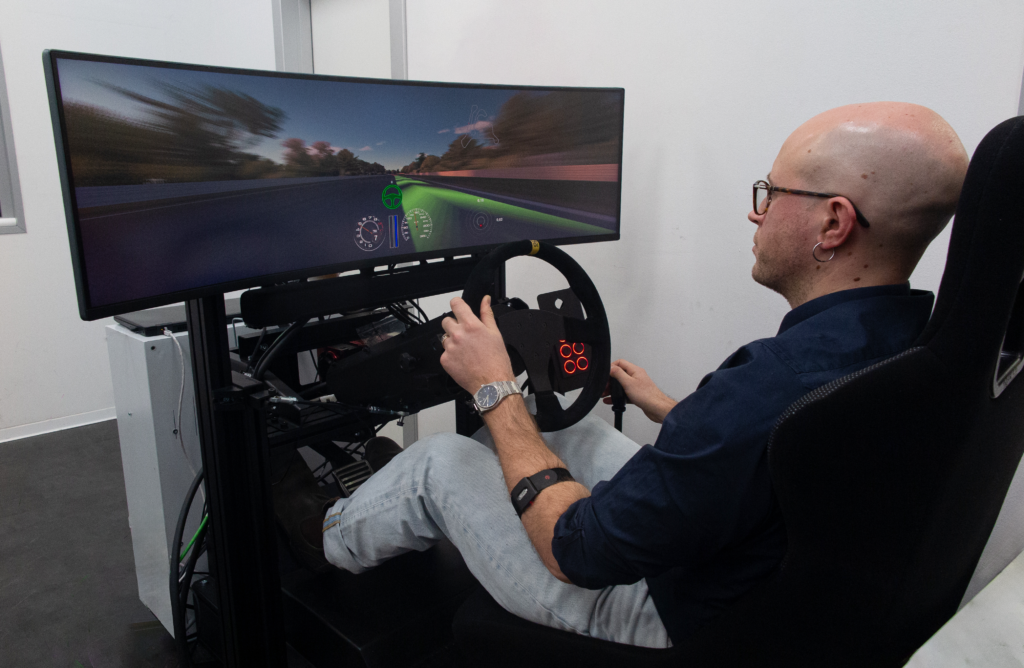
These driving sessions were therefore conducted on a virtual circuit characterized by curves and dynamic conditions requiring constant interaction with steering and braking controls.  

This extension broadens the experimental scope of the project, addressing multiple neurocognitive pathways leading to fatigue. 

Development of variable-feedback actuators

The key technological advancement of this phase is the development and integration of active feedback units for braking and steering. 

Conventional driving simulators often rely on passive or limited-feedback systems, where force characteristics are fixed or only marginally adjustable. This constrains the ability to systematically investigate how changes in haptic response influence driver workload and fatigue. 

To overcome these limitations, Meccanica 42 developed a configurable driving simulator with variable-stiffness feedback units, directly integrated into the cockpit and managed through dedicated control software. 

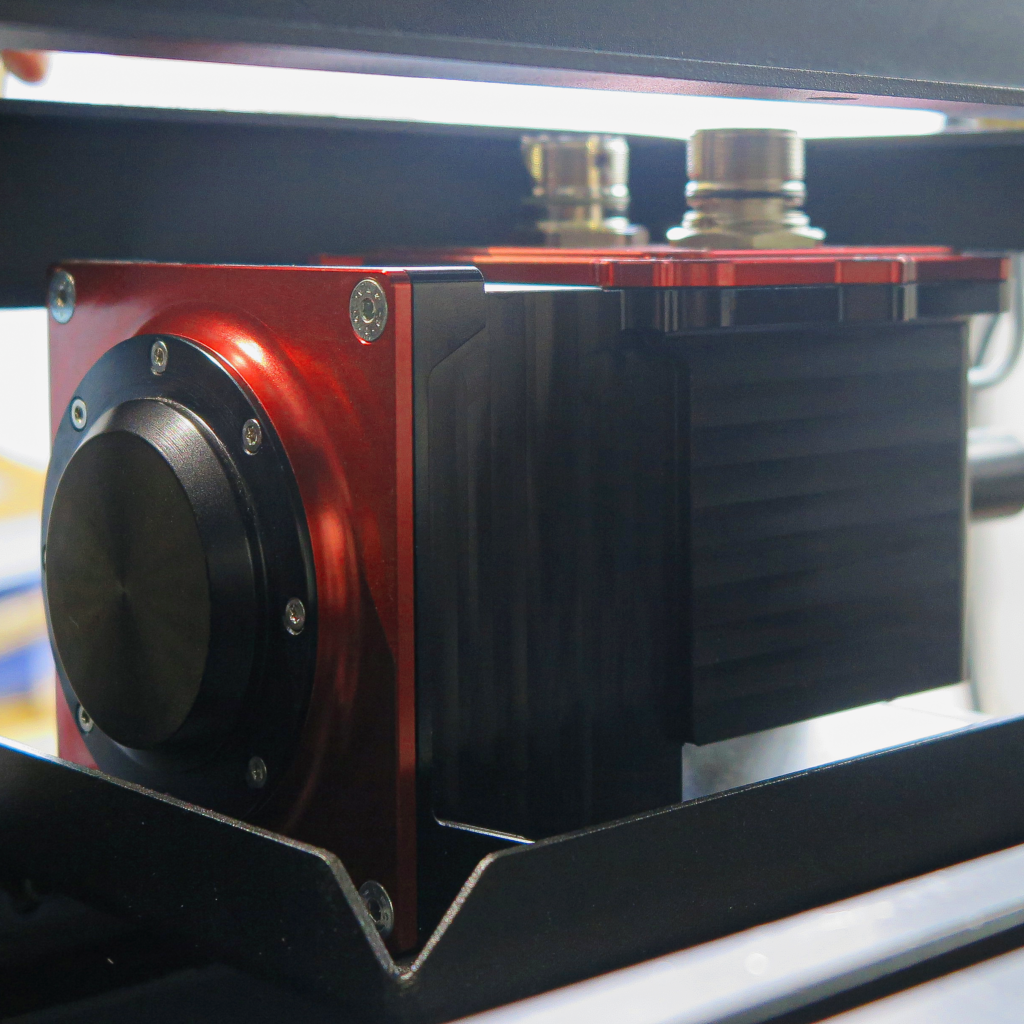
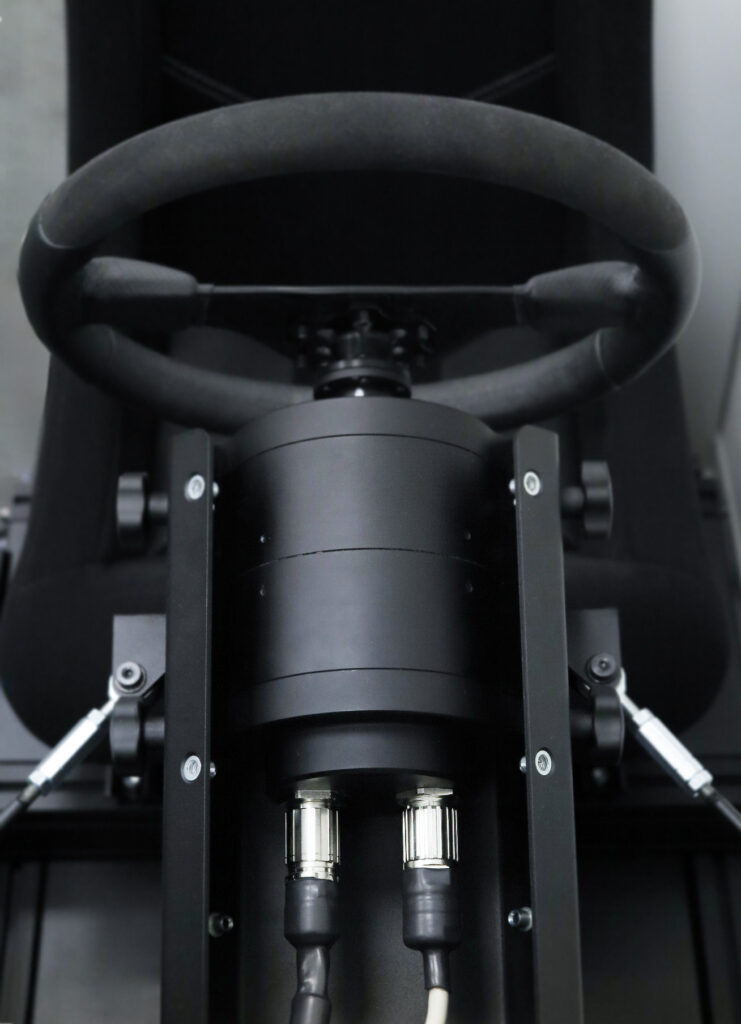
The Active Braking Feedback Unit allows programmable modification of the pedal force–stroke relationship, while the Active Steering Feedback Unit provides real-time modulation of steering torque characteristics. 

Active Braking Feedback Unit
Active Steering Feedback Unit

The result is a research platform capable of altering input dynamics in a controlled, rapid, precise and repeatable manner. Rather than reproducing a single fixed driving feel, the setup enables systematic exploration of how changes in haptic interaction affect fatigue mechanisms and detection sensitivity. 

Experimental design of the January 2026 campaign

The goal was to evaluate how different combinations of steering and braking feedback levels influence fatigue.

Four feedback levels were considered:

  • Soft / stiff steering
  • Soft / stiff braking

The campaign session was distributed across multiple days and conducted at consistent times of day to ensure comparability of conditions.

Before driving, participants completed a set of assessment tools designed to establish a cognitive and physiological baseline, including subjective fatigue perception, alertness evaluation, and psychomotor performance measurement.

Drivers then completed a driving scenario characterized by increased dynamic engagement. During the session, short subjective assessments were administered to monitor perceived fatigue evolution over time. At the end of the driving task, additional evaluation tools were used to assess overall workload, fatigue perception, and performance changes.

This protocol, developed by IMT Alti Studi Lucca, ensured integration of subjective workload assessment, psychomotor performance evaluation and continuous physiological monitoring.

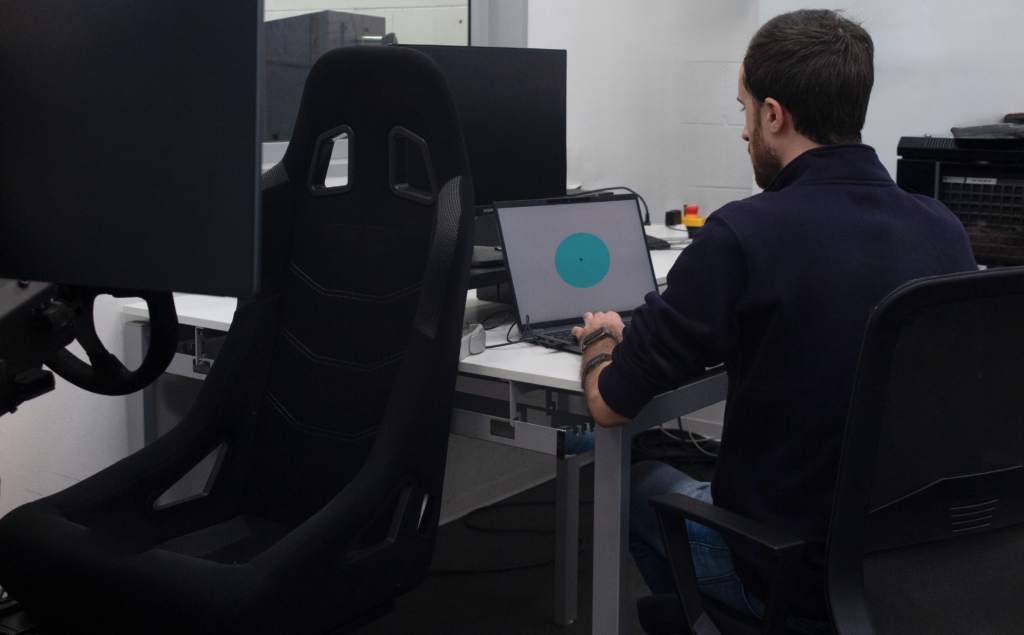
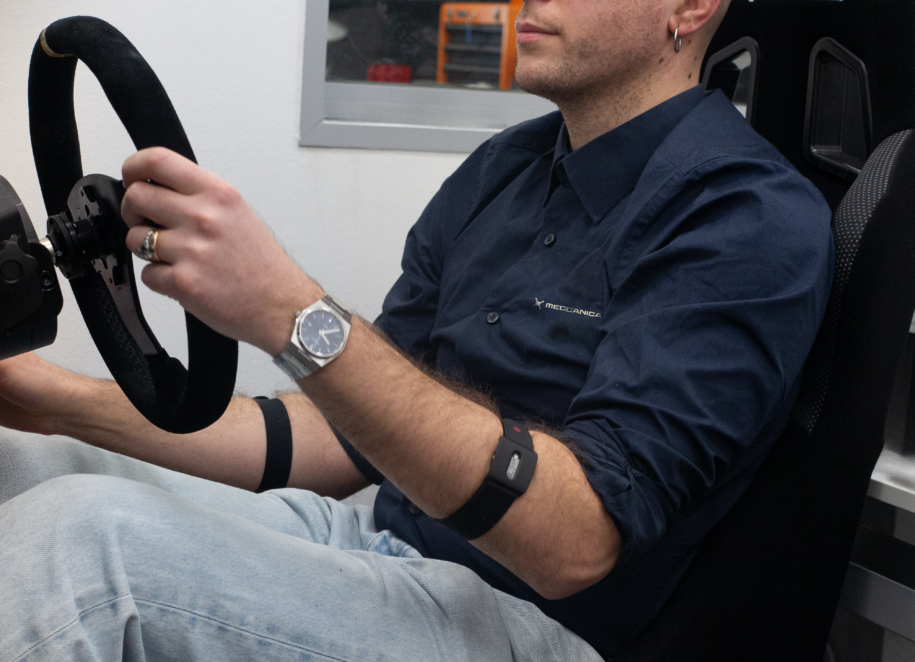
Cardiac signals were acquired using two POLAR devices: one recorded via the proprietary POLAR application, one integrated within the FDM4SAFETY acquisition system. This parallel acquisition allowed a comparative assessment of signal coherence, reliability of the data acquisition chain, and robustness of system-level integration.

Within the acquisition system, a dedicated software module developed by Meccanica 42 processes the raw data stream transmitted by the POLAR sensor. The incoming data are decoded and organized into 5-minute time series, which are then prepared as input for the fatigue estimation algorithm developed by IMT Alti Studi Lucca. The algorithm operates on a rolling basis, providing an updated estimation of the Karolinska Sleepiness Scale (KSS) every five minutes based on the processed physiological data. 

The estimated KSS value is visualized in real time on the device interface through a state-based representation: for example, values below 4 indicate a normal condition, values between 4 and 6 indicate increasing fatigue, and values equal to or above 6 trigger a recommendation to stop the activity. 

This approach is designed for deployment in both driving and operational environments, where real-time feedback can support users in recognizing fatigue conditions and taking appropriate action. 

Subjective and objective results

Preliminary qualitative feedback from drivers highlighted perceptible differences between soft and stiff configurations in both steering and braking. Variations were reported in perceived physical effort and stability of control. 

Data analysis, based on the responses collected through the questionnaires completed by the drivers, provides initial quantitative indications consistent with these observations.  

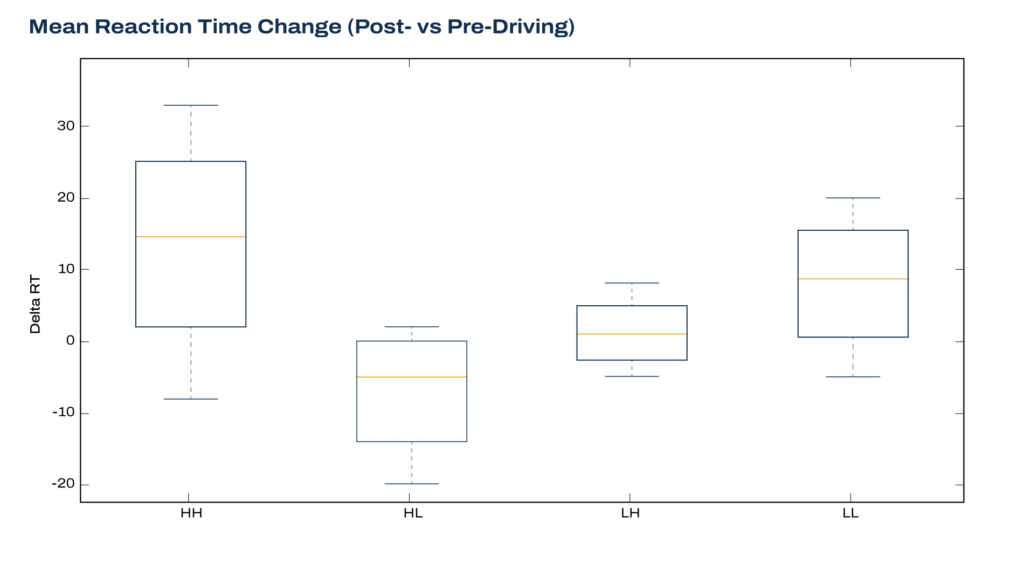
Reaction time analysis shows higher average values in the HH configuration (high level steering feedback, high level braking feedback), indicating a greater impact on responsiveness compared. Overall, both HH (high–high) and LL (low–low) configurations are associated with a greater reduction in responsiveness compared to mixed configurations which present lower or even negative variations. This result is aligned with subjective feedback from the drivers, who identified the configuration with both steering and braking set to high stiffness as the most demanding. 

HH = High Level Steering Feedback, High Level Braking Feedback 
HL = High Level Steering Feedback, Low Level Braking Feedback  
LH = Low Level Steering Feedback, High Level Braking Feedback 
LL = Low Level Steering Feedback, Low Level Braking Feedback 

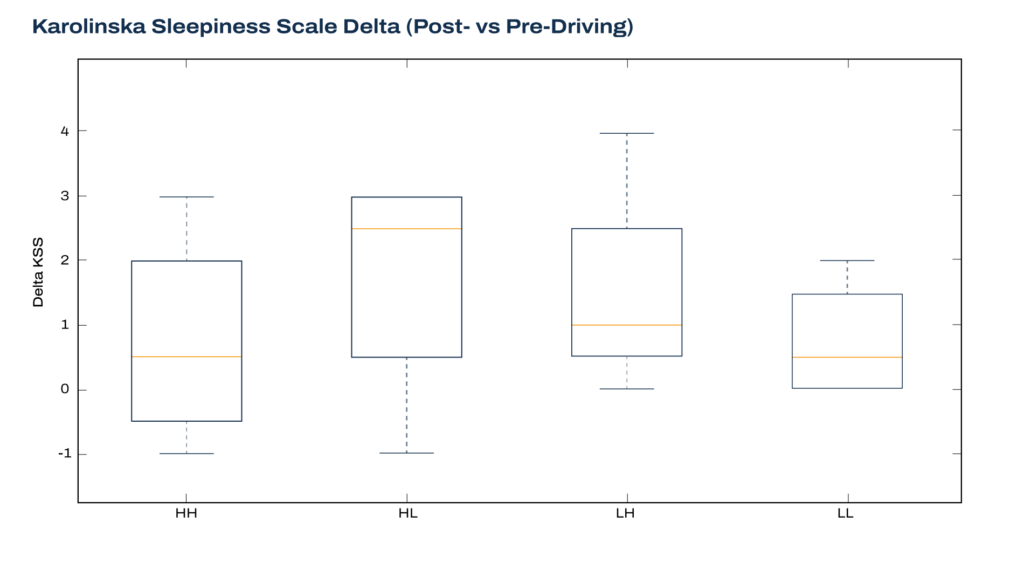
However, the analysis based on the Karolinska Sleepiness Scale (KSS) highlights a different trend. The HL configuration (high steering feedback, low braking feedback) results in higher perceived sleepiness compared to the other conditions.  

HH = High Level Steering Feedback, High Level Braking Feedback 
HL = High Level Steering Feedback, Low Level Braking Feedback  
LH = Low Level Steering Feedback, High Level Braking Feedback 
LL = Low Level Steering Feedback, Low Level Braking Feedback 

From simulator validation to real-world deployment

The simulator equipped with active feedback units represents an intermediate but necessary step toward real-world validation.

After consolidating and validating our acquisition system equipped with the algorithm developed by IMT, we will use it in the next phase of tests that will include:

  • driving sessions on a real vehicle
  • deployment of wearable sensors in an operational workshop environment, where technical staff will be monitored during regular working activities

The same acquisition architecture will be maintained to ensure methodological continuity between laboratory and real-world conditions.

This transition will provide further evidence of system robustness and applicability in both automotive validation and occupational safety scenarios.

CUP ST 27717.29122023.043001285

Progetto co-finanziato dal PR FESR Toscana 2021-2027 RICERCA E SVILUPPO PER LE IMPRESE ANCHE IN RAGGRUPPAMENTO CON ORGANISMI DI RICERCA Bando RS2 2023.

For more information about our innovative solutions and how they can streamline your vehicle’s functions development, please contact us.

Don’t forget to follow us on LinkedIn, Instagram, and to subscribe to our newsletter to stay in the loop!