Sustainable Integrated System for Total non-Exhaust Reduction

P.A.R.T.E.N.O.P.E.

Sustainable Integrated System for Total non-Exhaust Reduction

Integrated vehicle platform for non-exhaust emission analysis

The Sustainable Integrated System for Total non-Exhaust Reduction (S.I.S.T.E.R.) project is led by Università degli Studi di Napoli Federico II, scientifically coordinated by Professor Andrea Genovese and developed within MOST, the National Centre for Sustainable Mobility.

The project focuses on the development of an integrated framework for the generation, collection and measurement of non-exhaust particulate matter (PM).

A specific focus of the project is the development of an outdoor, on-vehicle measurement platform capable of collecting particulate emissions under realistic driving and test-track conditions.

The system is designed to cover the full tire development chain, enabling consistent characterization of brake and tire wear emissions and supporting mitigation strategies across different development stages.

P.A.R.T.E.N.O.P.E.

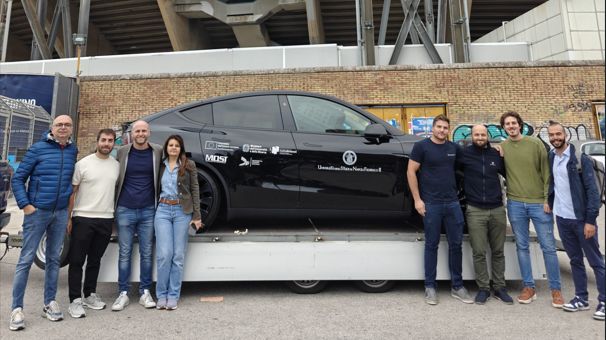
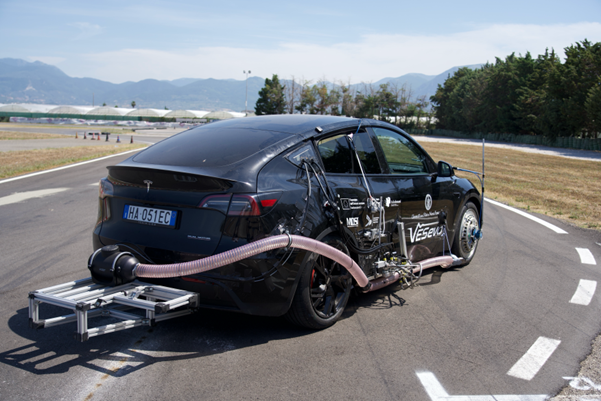
A key outcome of the project is the development of a dedicated instrumented vehicle, named P.A.R.T.E.N.O.P.E. (Particulate Analysis Research on Tire Emissions aNd Optimization Pollution in the Environment).

The vehicle is designed as a real-time outdoor measurement platform for non-exhaust emissions, enabling on-vehicle acquisition during proving-ground, test-track and representative driving conditions.  

The system is capable of simultaneously acquiring: 

  • particulate matter from tire and brake sources  
  • vehicle dynamics parameters  
  • particle size distribution (PM1, PM2.5, PM10)  

The platform is based on a vehicle specific architecture, conceived by the Federico II team and developed with Meccanica 42, which designed and manufactured the dedicated interfaces needed to integrate the measurement technologies into a Tesla Model Y electric vehicle, without modifying the chassis or structural elements. 

The Tesla Model Y, in its Performance configuration, was selected to minimize combustion-related interference and ensure controlled conditions for non-exhaust emission analysis.

Its electric drivetrain provides sufficient wheel torque, enabling tire operation across representative dynamic conditions. 

An enclosure-based measurement platform

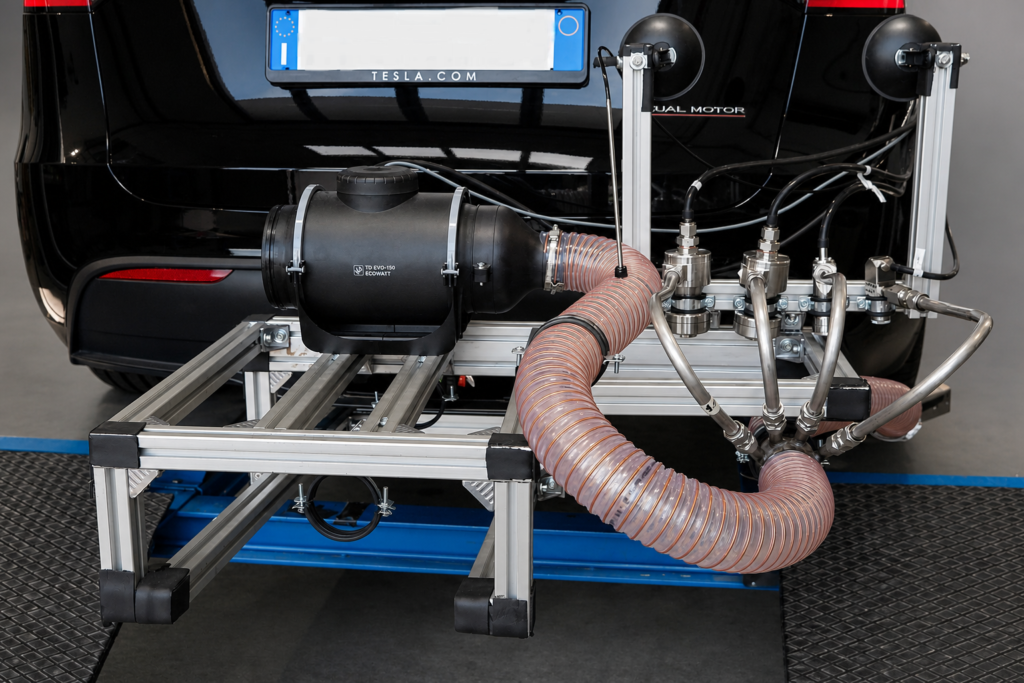
The measurement system is designed as a vehicle-specific architecture in which third-party measurement technologies are integrated into a donor serial vehicle with dedicated interfaces developed by Meccanica 42, without any modification to the chassis or structural elements of the donor vehicle.  

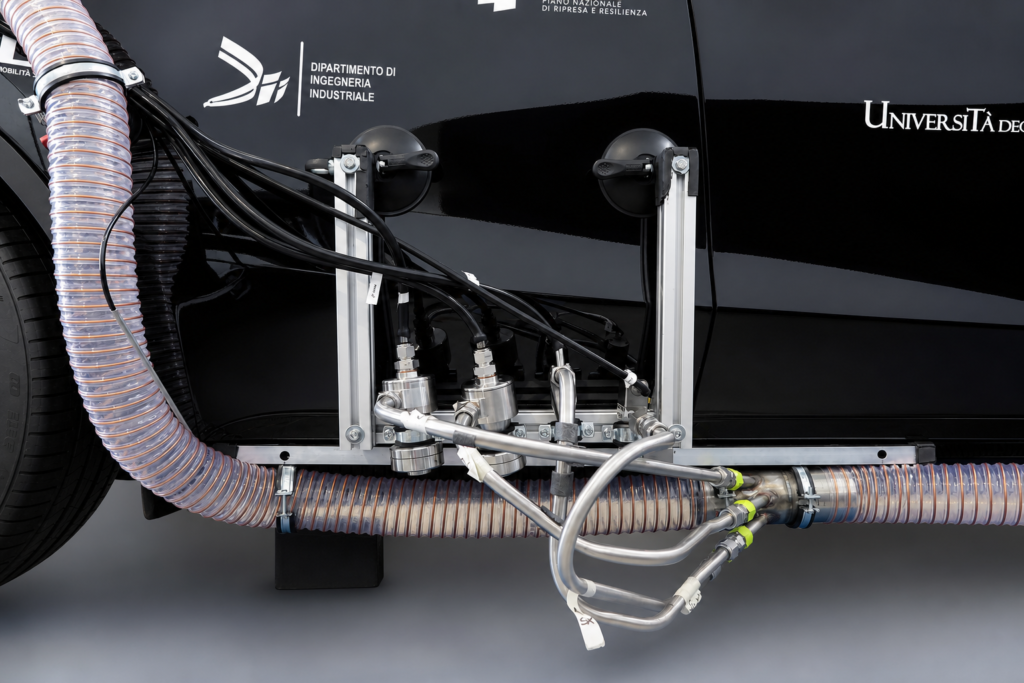
non-exhaust emission measurement points

Thanks to its modular design, the system allows easy transition between different measurement points with minimal disassembly and reassembly operations. 

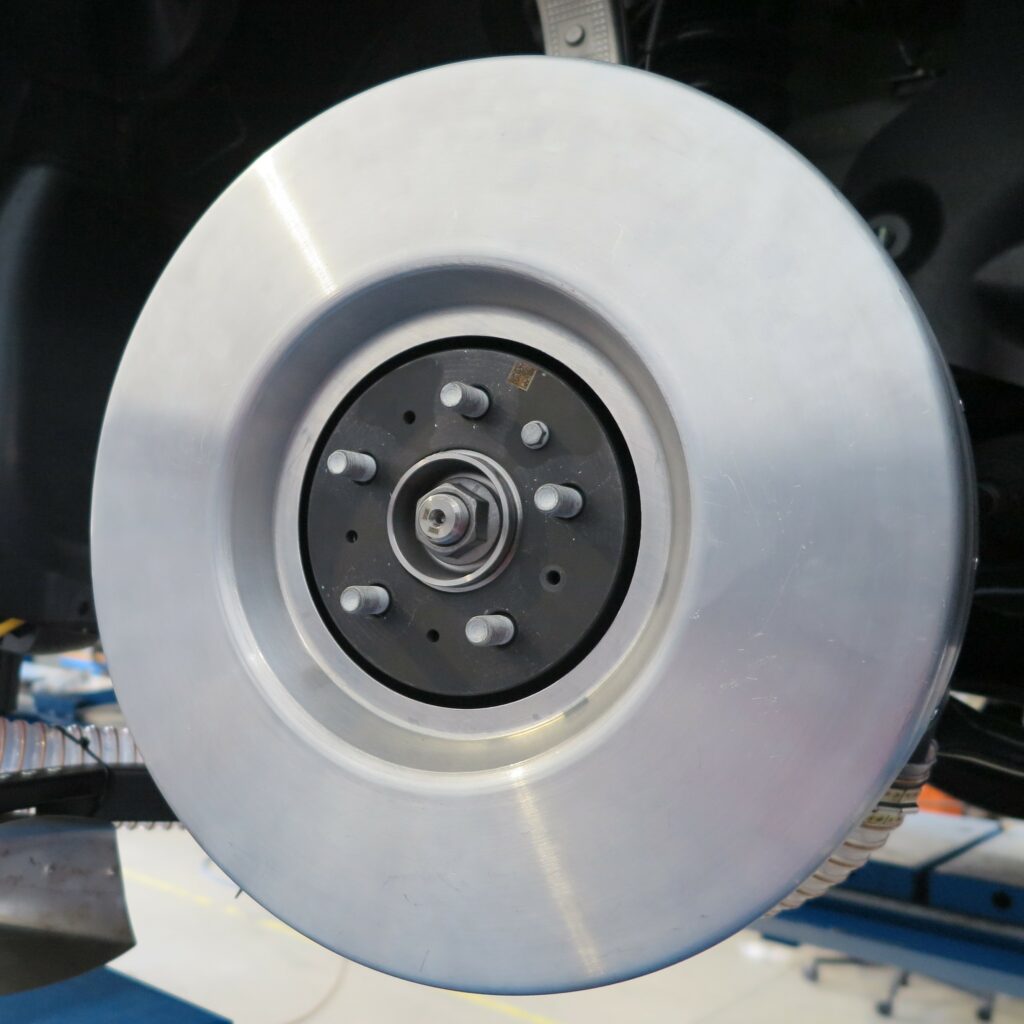
Meccanica 42 has also developed a key element of the architecture: separated enclosure system between brake and tire. The system includes dedicated components for flow management and particulate transport toward the measurement systems, enabling controlled sampling conditions during testing. 

Enclosure-based measurement system for non-exhaust emission

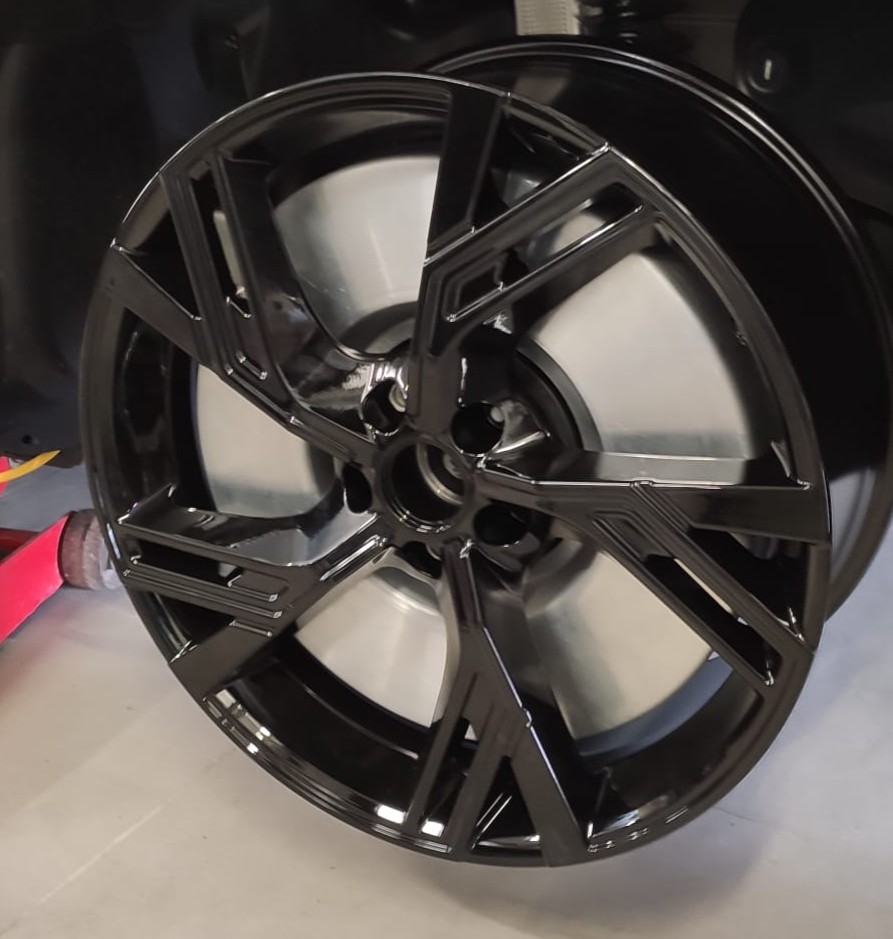
Brake enclosure with and without wheel rim. 

This system allows: 

  • easy installation on the vehicle and adaptability to different testing needs: tubing layouts and sampling points can be repositioned to investigate environmental factors and minimize their influence on the Device under Test (DuT) KPIs  
  • reduced influence of external environmental conditions: a reference sampling area without direct brake or tire contribution is used to characterize ambient contamination levels  
  • control of fluid dynamic conditions during testing through optimized positioning of the sampling points  
  • separation of brake and tire emission sources: independent analysis of particulate generated by brakes and tires is a key factor when comparing different solutions (e.g. different tire configurations) and evaluating their respective emission performance  
  • synchronized acquisition of emission measurements and vehicle dynamics data, allowing correlation between emission behavior and real operating conditions, ensuring that results are suitable for regulatory validation activities  
P.A.R.T.E.N.O.P.E. for non-exhaust emission

P.A.R.T.E.N.O.P.E. during outdoor test-track operation: synchronized acquisition of non-exhaust emissions and vehicle dynamics data.

The result is improved measurement reliability under outdoor operating conditions and better usability of the collected data within Euro 7 validation processes.

EURO 7 as a regulatory driver

This project is positioned within the broader regulatory framework of Euro 7, which extends emission requirements to non-exhaust sources such as brake and tire wear particles.

This introduces new requirements for OEMs and Tier 1 suppliers, including:

  • full lifetime compliance with emission limits
  • integration of On-Board Monitoring (OBM) systems
  • environmental data reporting and vehicle environmental passport

From an engineering perspective, this translates into the need for repeatable and controlled measurement of friction-generated particulate matter across different configurations.

Conclusion

Euro 7 is changing the way brake and tire wear emissions must be measured, requiring repeatable data under controlled and realistic operating conditions.

To address these requirements, S.I.S.T.E.R. provides an integrated vehicle platform for the analysis of non-exhaust particulate emissions, combining measurement technologies, dedicated vehicle interfaces and synchronized vehicle dynamics data.

The separation of brake and tire emission sources supports clearer data interpretation and enables direct comparison between different technical configurations.

The project therefore contributes to the development of reliable testing procedures for future Euro 7 validation activities.

For more information about our innovative solutions and how they can streamline your vehicle’s functions development, please contact us.

Don’t forget to follow us on LinkedInInstagram, and to subscribe to our newsletter to stay in the loop!