HiL: saving millions of kilometres every year
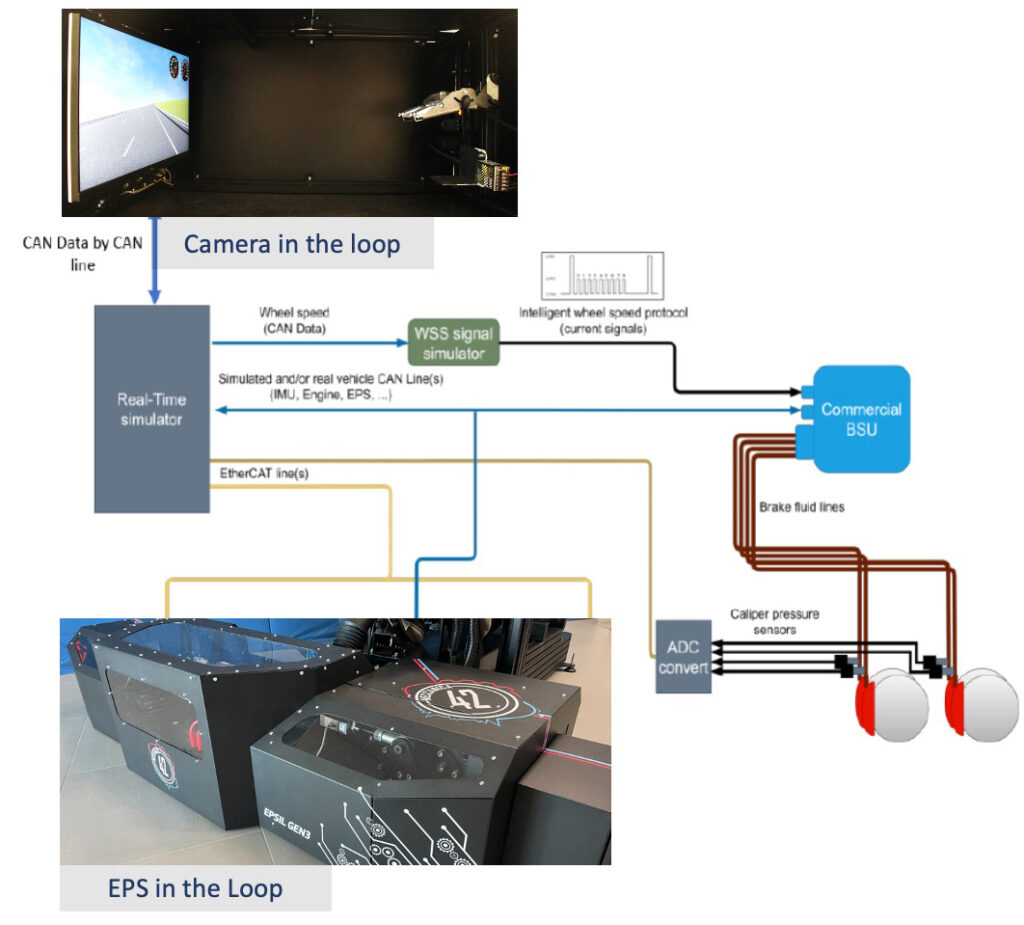
HiL testing involves connecting a system under development, such as electronic control for a vehicle or an industrial control system, to a real-time simulator.
The simulator replicates the behavior of the surrounding system and provides realistic inputs to the development system.
It enables testing in a controlled and repeatable environment, reproducing complex scenarios and operating conditions challenging to achieve in real-world tests.
In addition, it allows to minimize the need for expensive hardware prototypes to test software, allowing the identification and resolution of issues during the development phase.
HIL testing has become a crucial element in the development of complex systems, providing a more efficient and reliable approach to verifying the functionality and performance of embedded systems.
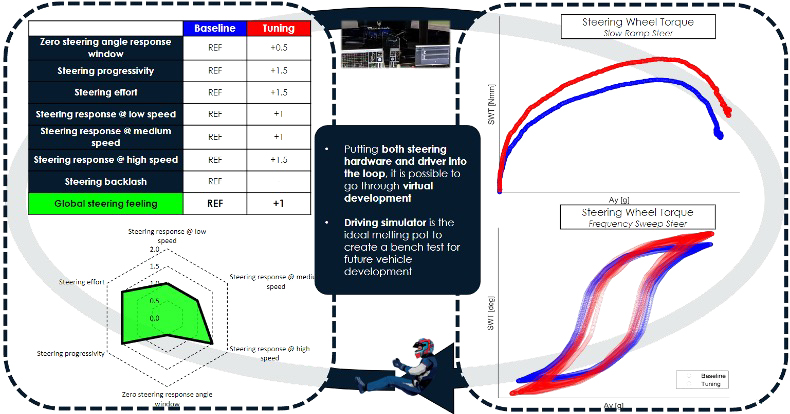
The aim of this first activity was to calibrate the bench at best.
Then, starting from this calibration of the EPSiL bench, a new steering rack has been developed and fine-tuned.
The calibration was performed using numerical evaluation and the human perception of a real professional driver.
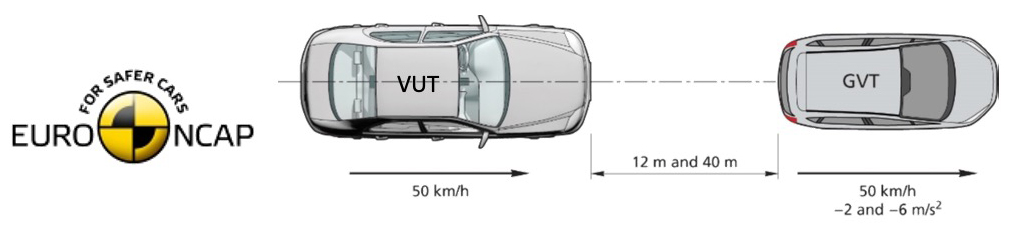
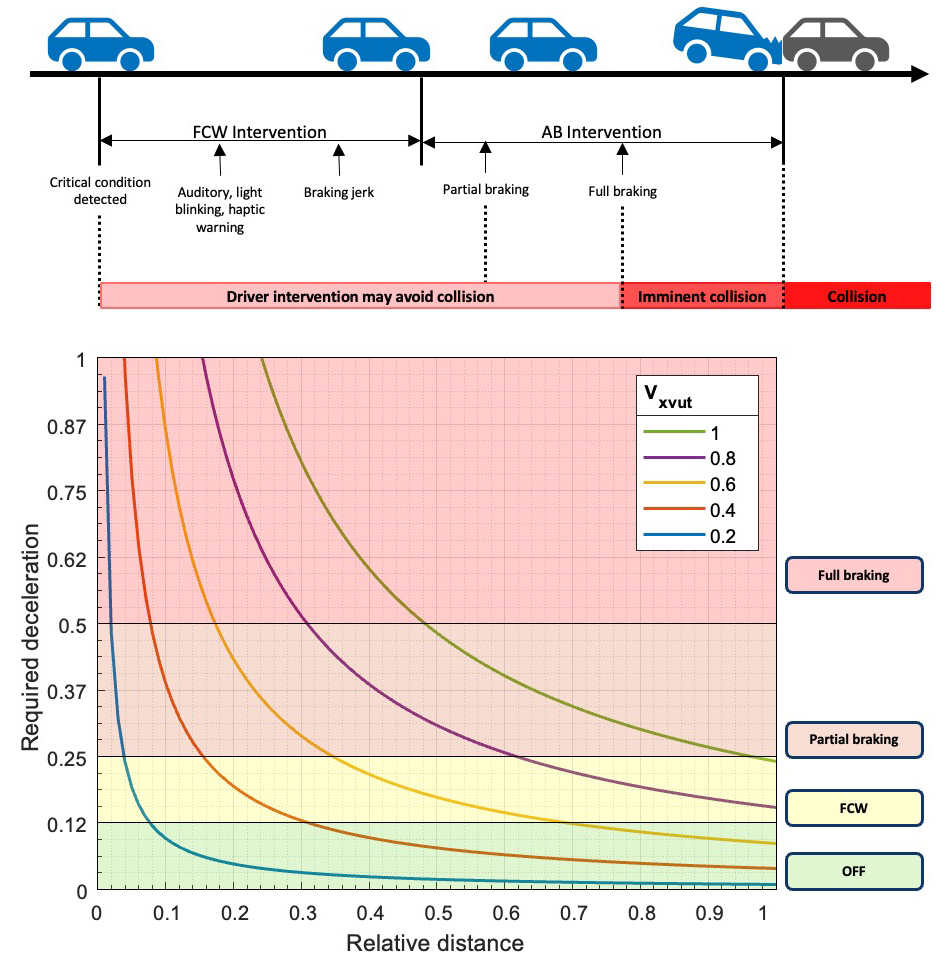
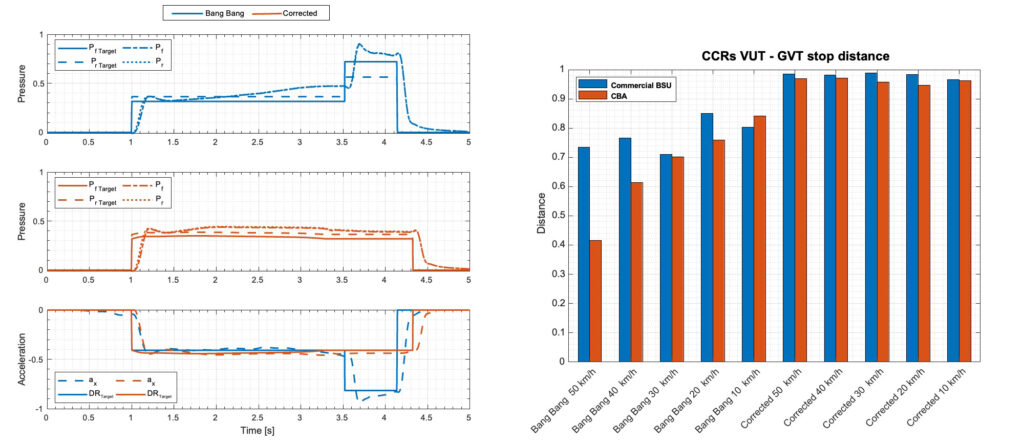
The aim of the second study was to model and test an innovative AEB control logic that will increase system reliability by compensating for the non-immediate response of brake system to brake requests.
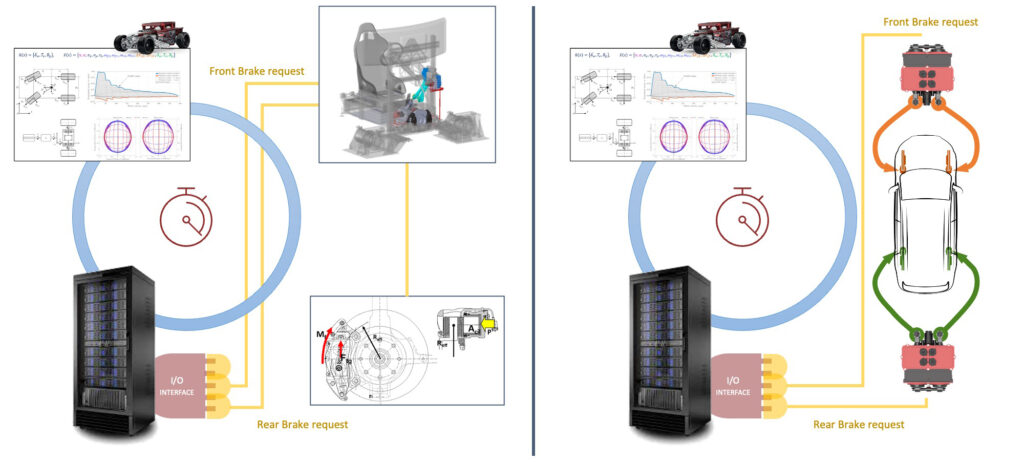
The effectiveness of the control logic has been tested on two different braking system:
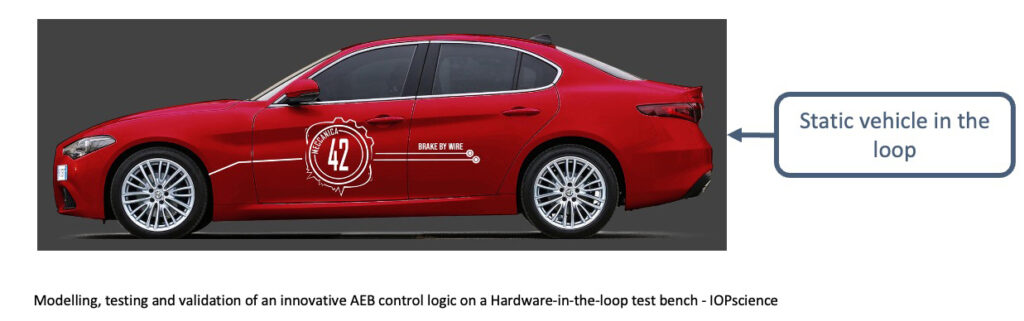
   1. Two CBAs ,installed on an experimental vehicle, were directly integrated into the simulation loop
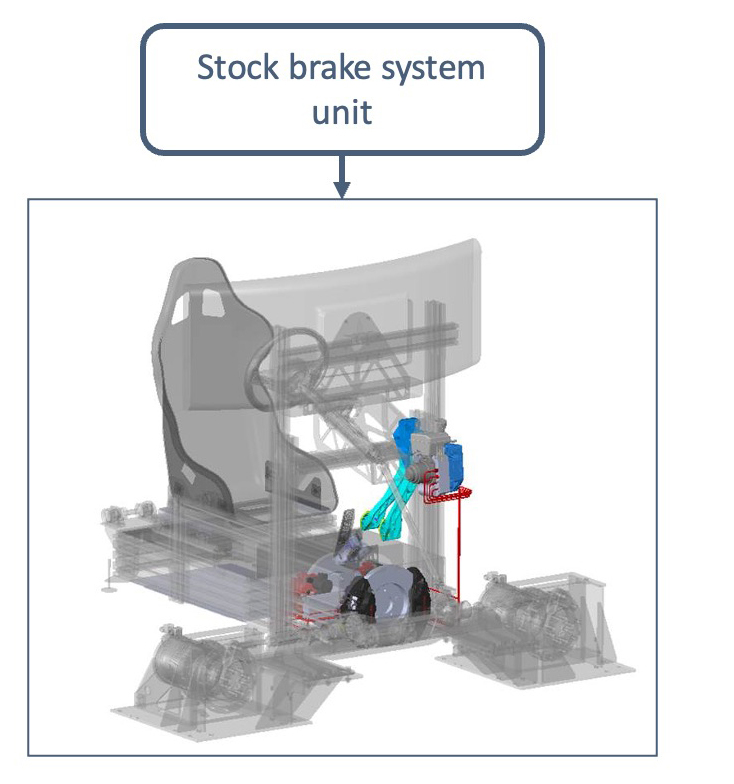
   2. A stock brake system unit integrated into the static simulator
Hardware in the loop technique has been fundamental to reproduce as accurately as possible the response of the braking system to AEB triggering.
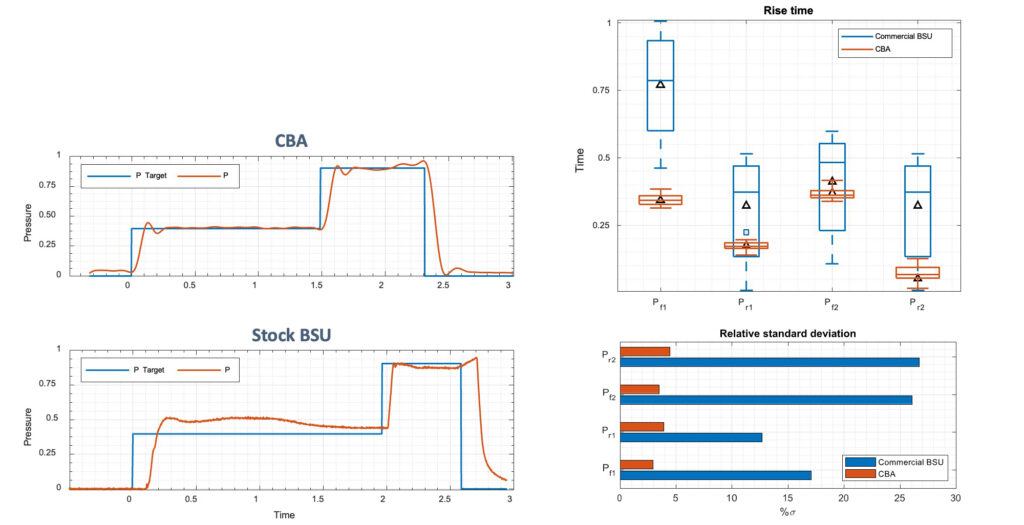
The developed controller demonstrates high reliability as it guarantees the same performance acting on two different brake systems without the need of tuning activities.
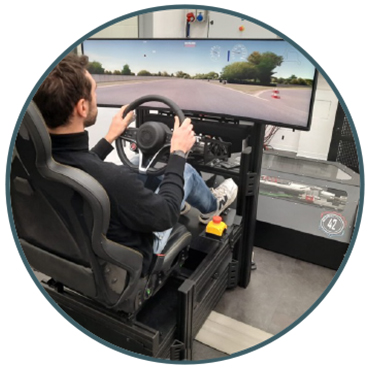
Steering System in the Loop, including:
Braking System in the Loop, including:
Camera in the Loop
Expandable solution:
Steering System in the Loop, including:
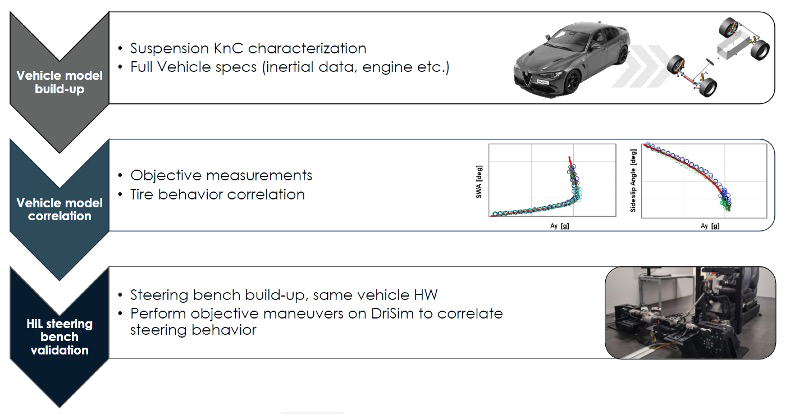
Workflow
Calibration of the new EPS
Recap of the activity
The kinematic chain, from suspension tie rod to steering wheel, is successfully replicated on our steering bench.
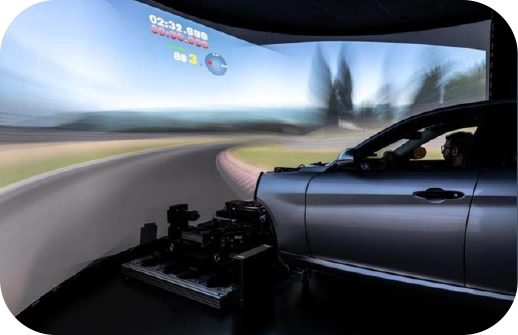
The simulator can hence be used for the vast majority of the new component development process.
Advantages
A Virtual Development Approach Using Advanced HiL Steering Bench – Talarico, Enrico Maria, et al. 12th International Munich Chassis Symposium 2021: chassis. tech plus. Berlin, Heidelberg: Springer Berlin Heidelberg, 2022.
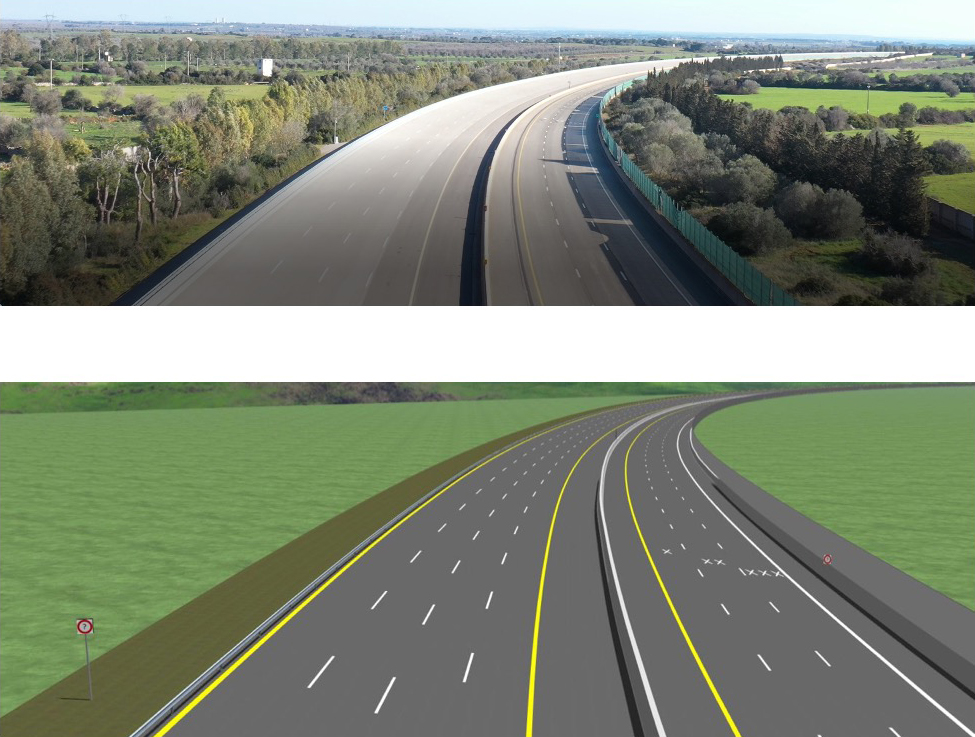
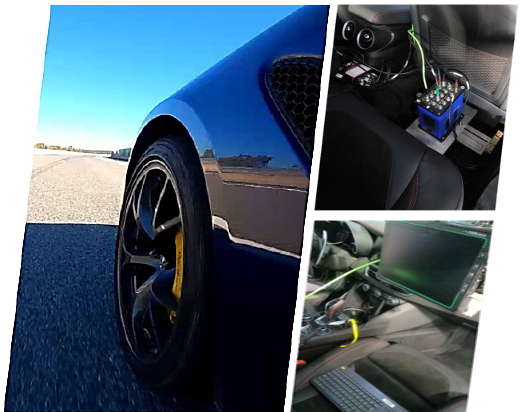
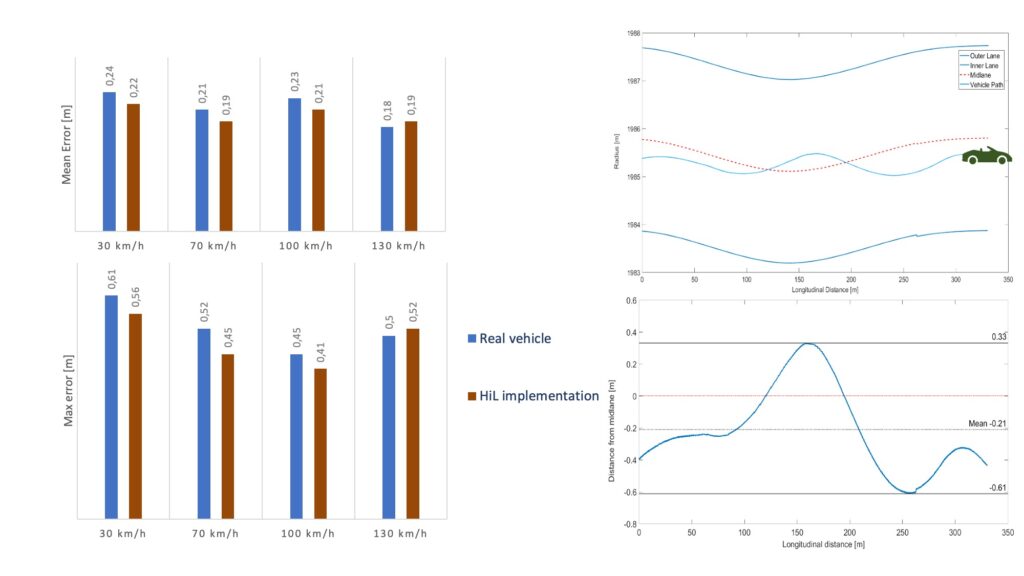
Test Lane Centering Assist system in both physical and virtual test track with HiL benches
Tool and Methodology Development for LCA Hardware in the Loop Testing – Alfatti, F., Lelli, L., Annicchiarico, C., Capitani, R. (2024). In: Pfeffer, P. (eds) 13th International Munich Chassis Symposium 2022. IMCS 2022. Proceedings. Springer Vieweg, Berlin, Heidelberg.
Development of an AEB controller, focused on the compensation of the delay in pressure build-up introduced by brake plant response
Brake system independent control logic
Stock brakes system integrated into simulation loop
CBA and whole vehicle brake plant integrated into simulation loop
Adaptable brake request controller based on vehicle status
High reliable controller
Rise time comparison between CBA and Commercial BSU